

CEEA Talks: Zsuzsanna Vincze & Tibor Bánóczki: “There’s no such thing as a typical MOME style”
There seems to be something in the water in Hungary that has propelled the quality and success of the country’s animation industry to new heights in recent years. But what is the secret behind this boom? In previous interviews, we asked filmmakers, producers and the curators of the Hungarian programme at Annecy 2025. Yet anyone seeking a genuine answer to that question need look no further than the Moholy-Nagy University of Art & Design – that’s the official name; MOME is the name by which the school is widely known, and MOME Anim is the brand that travels the world. And Zsuzsanna Vincze and Tibor Bánóczki are the lecturers who are set to reveal the sector’s secret.
Zsuzsanna Vincze: I’m the producer of the six to eight graduation films we deliver each year at the Animation Department at the MOME University.
Tibor Bánóczki: I’m the Head of the Master’s programme. The third member of our team is Orsolya Sipos, Head of the Bachelor’s programme. Our three-year Bachelor’s programme is taught in Hungarian, while our two-year Master’s programme is taught in English, attracting both Hungarian and international students.
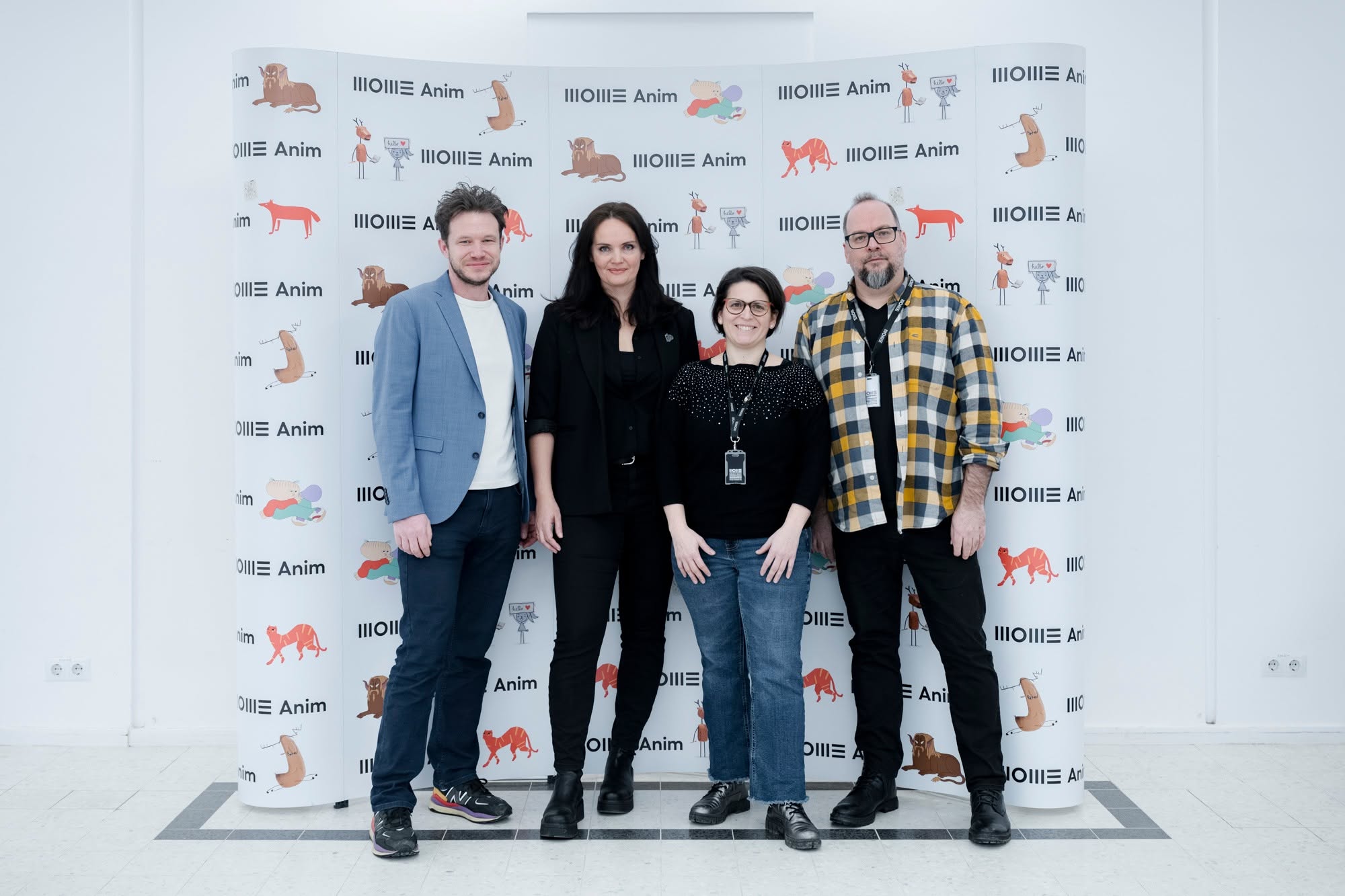
The animation course is part of the relatively new Film Centre, which was established at the university three years ago.
Vincze: It is a department within the university that focuses on animation while remaining open to other areas of the film industry.
2025 was ‘the year of Hungarian animation’. But that’s history now…
Bánóczki: Over the past two decades, a host of young Hungarian directors have made their mark on the international stage, helping spark a boom in Hungarian animation.
Vincze: And most of them came from MOME. The 111th anniversary of Hungarian animation was a good reason to celebrate. As the guest country at the Annecy festival, we hosted a range of events. That one week in Annecy took nine months of preparation, but in the end it was a success. This year, I hope to finally watch some films in Annecy; last year, I hardly managed.
But you’re a school! Why did schools have to go to such lengths for that celebration?
Bánóczki: You could see it as either a compliment or a criticism of the international animation scene that young filmmakers occupy such a prominent place in the market with their student films or first works. When I started out 20 years ago, you’d see 50- or 60-year-old masters at every festival, who had built entire careers making short films. That’s no longer possible. Today, young directors, including MOME students, are taking a large slice of the pie. This shows how much the animation scene has changed: This celebration needed MOME because we represent such a significant part of the Hungarian animation industry.
Your aim is not only to educate Hungarian students, but also to attract students from all over the world to Hungary.
Vincze: Ever since we switched our Master’s programme to English, we have aimed to attract the best students to MOME. We believe this international environment offers a huge advantage for their later careers, allowing them to build contacts here and turn them into lasting partnerships.
Bánóczki: Budapest is an inspiring place to meet fellow students, teachers and mentors, coming from so many cultural backgrounds.
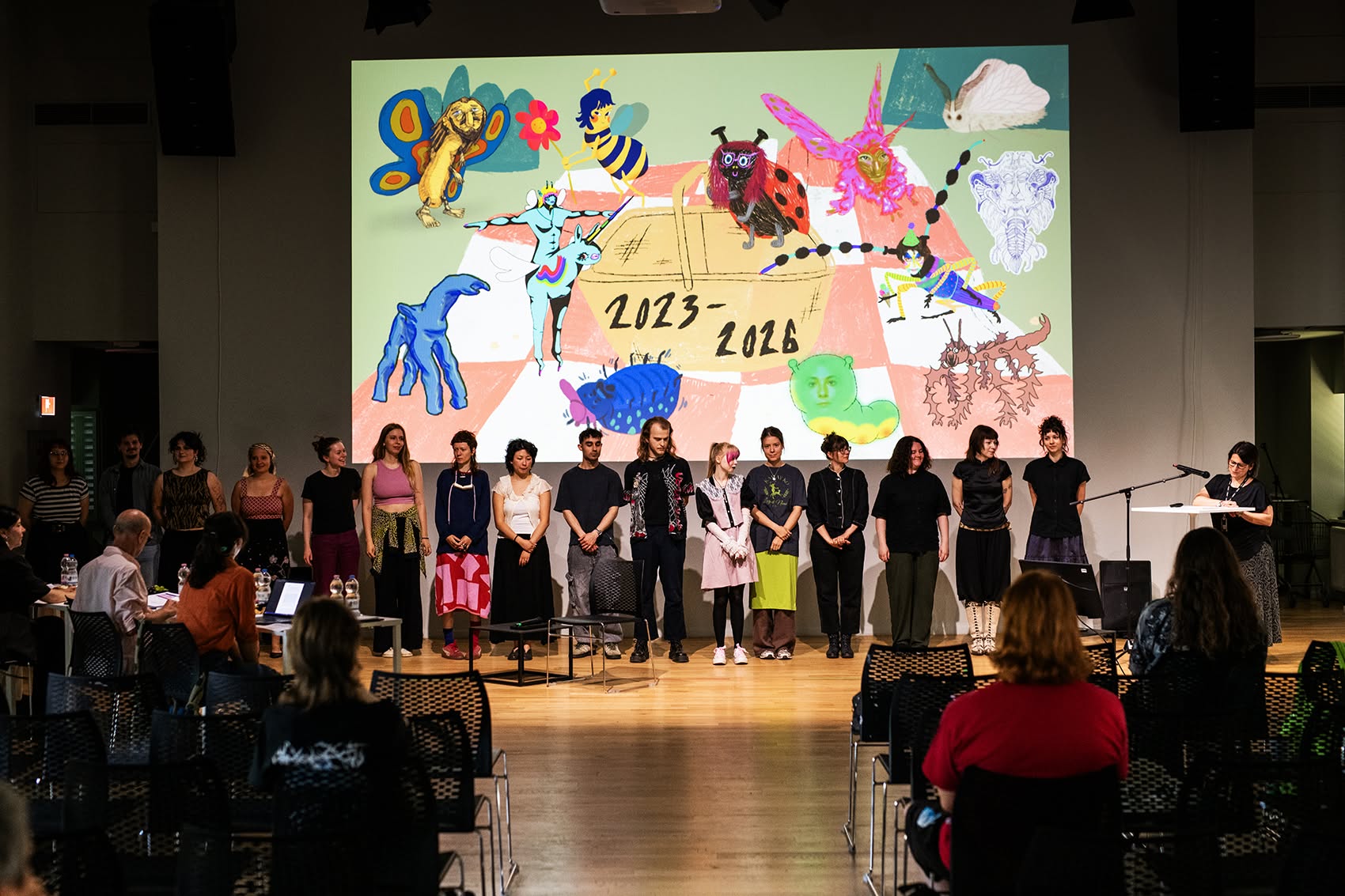
I often hear people describe a film as being ‘typically MOME’. Those films are usually a bit wild and rebellious. Is there such a thing as the MOME style?
Bánóczki: If there’s one thing you can say after watching the full graduation programme each year, it’s that there’s no such thing as a typical MOME style. But over the last 10 years, a whole generation of female directors has emerged. I wouldn’t exactly call them rebellious, but they dare to be very honest about themselves and place their own experiences at the heart of their work. Their films, mostly made in 2D, seem to form a kind of unity and have come to define the last decade of Hungarian animation. We don’t teach students to be rebellious, but to be brave and critical. Their works all share a certain surrealism or idiosyncrasy. Compared to what I see at some other schools, their style tends to be harsher, raw, and stubborn in its self-expression.
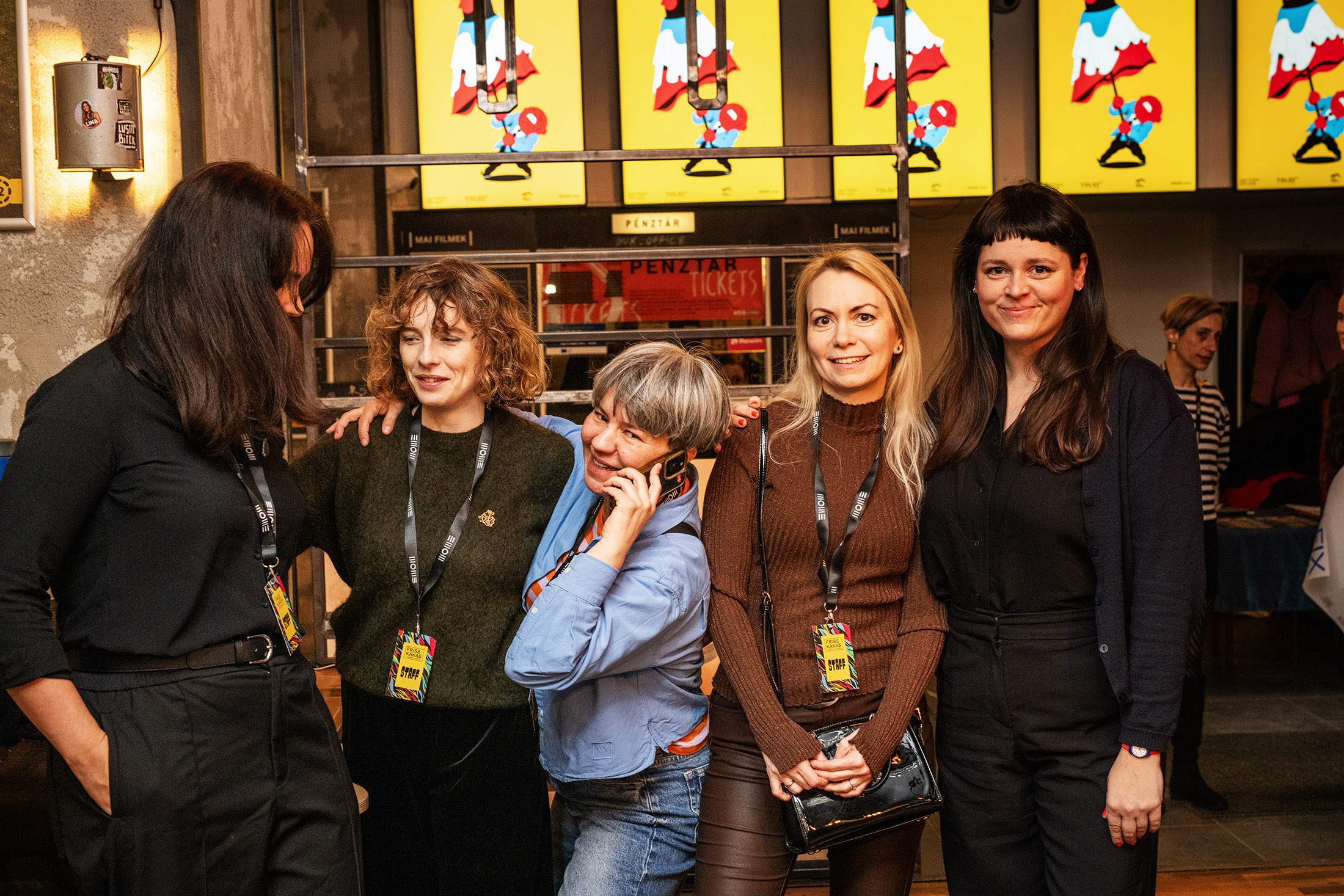
Another plus point for MOME is that the school stands very close to the industry. Is that because the teachers themselves are active professionals?
Vincze: Most of them come from the artistic side: animation directors or illustrators. Because they work on short films, series, or feature animations themselves, they have an accurate view of the field. They know what’s happening out there, pass it on to their students, and paint a realistic picture of the profession. However, we do shield students from some of the harsher realities of the outside world because the school wants to offer them a protected environment. This is the last time they can experiment freely, try new formats, and make mistakes.
Bánóczki: It’s not just that students stand close to the industry; they simply are the industry. The Hungarian film sector has had a rough decade, and the animation market has shrunk drastically. So when these students graduate, they will be the ones making the films. After the recent political changes in Hungary, we are redefining what the film industry is, and these students are at the centre of it.
While trying to attract students from abroad, you’re also sending MOME students out through exchange programmes with other schools.
Bánóczki: Students often spend one or two semesters abroad, where they encounter different visual traditions, different approaches to art in general, and absorb new cultural influences. It broadens their perspective and exposes them to different educational structures and strategies at schools such as UMPRUM or Gobelins, and that can be very valuable.
Vincze: Even the political situation in Hungary couldn’t stop us from maintaining our connections with European higher education institutes. We encourage students to attend various pitching forums, for instance through CEEA, and our internship programmes allow them to gain experience at international companies after graduation.
What about your connections with other Hungarian institutions, such as Metropolitan University (METU) or Eszterházy Károly University?
Vincze: It’s a small country with a limited number of professionals, and we all know and appreciate one another, but we don’t have particularly close collaborations. METU is a private university, while we are a state institution, and our programmes differ in a number of ways. Eszterházy is located in Eger, outside Budapest, and plays an important role in its region. But we don’t work with either institution on a day-to-day basis.
Due to the political upheaval some 35 years ago, when state-run studios closed their doors, the animation industry in many Central European countries had to find a way to keep the tradition alive. Some of your colleagues told me that in Hungary, this was mainly due to the role of service production, carrying out work for major international studios.
Bánóczki: The people who revived Hungarian animation didn’t come from service production! Maybe that’s a producer’s perspective, because that kind of work did help some studios stay afloat. There was a lot of money going around, but very little of it found its way back into Hungarian animation. And while there were plenty of jobs, only a small number of directors were employed. That was the reality. The revival of Hungarian animation was not a result of that period, and the directors I knew when I was younger came from completely different professional backgrounds.
As teachers, you see what’s going on in the minds of today’s students. What concerns do you see, and how have they changed over the last 10 to 15 years?
Bánóczki: It’s a very different generation from the one we had 10 years ago. They are highly aware of politics, the environment, and social issues, much more aware than we were at their age. That creates a lot of anxiety and tension. There are so many unanswered questions: how AI will affect their work, political and cultural changes, new funding systems, society’s attitude towards artists…
Vincze: All of this is creating an existential crisis. That’s why we spend so much time discussing these issues. A huge chunk of my working hours is dedicated to exactly these conversations.”
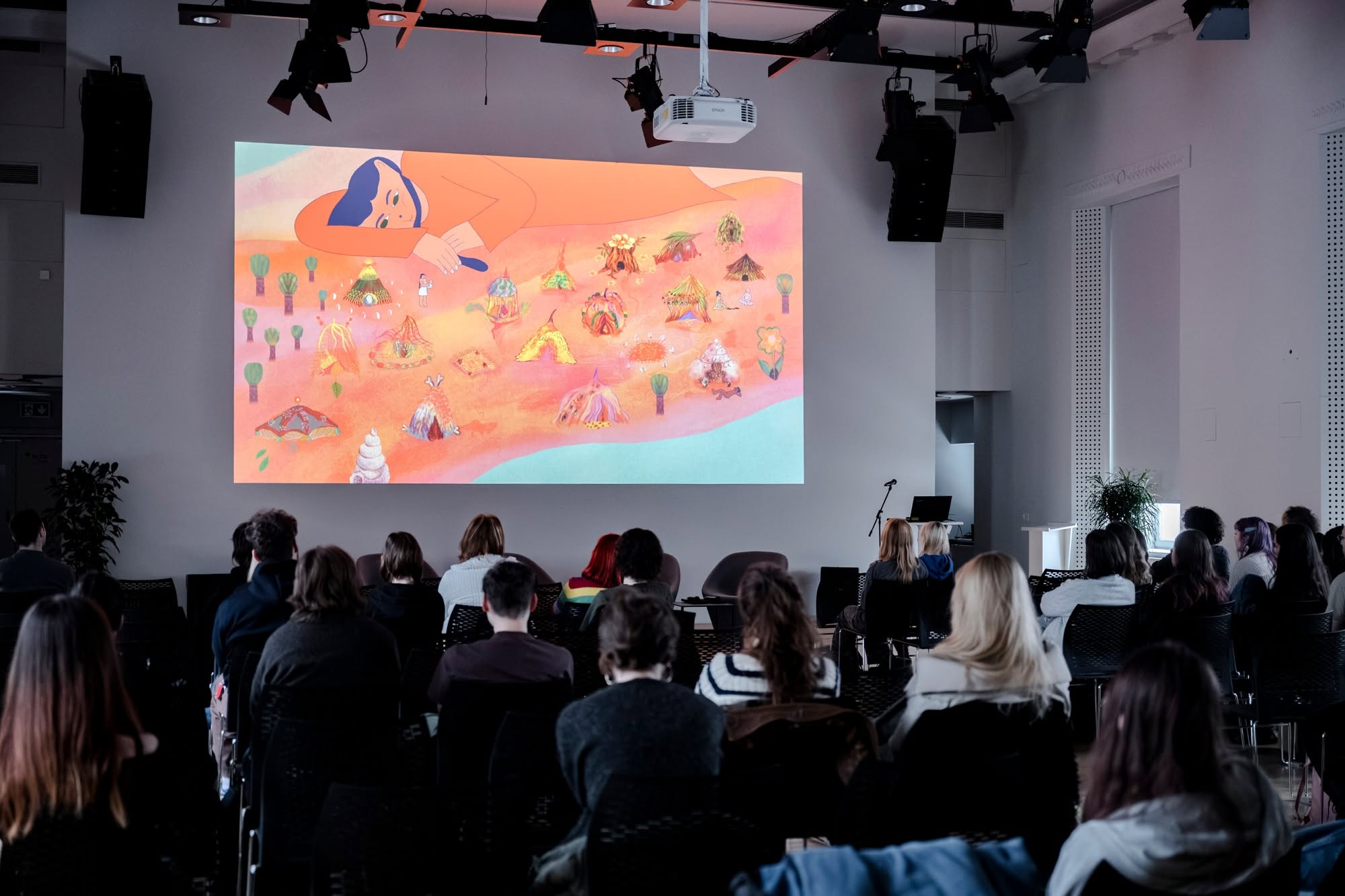
Does that mindset also find its way into their creative work?
Bánóczki: Students are much more open and courageous when it comes to talking about themselves in their films – sexuality, gender, society, and personal struggles. They dig deep and bring their concerns to the surface. Supporting their mental well-being is an important task for us, teachers, although sometimes we feel more like psychiatrists…
Vincze: Honestly, I’m not trained for that job. All I have is common sense. I can only tell them how I deal with these things myself.
MOME has a reputation for being very attentive to students’ well-being. A special programme was even launched to address this need.
Bánóczki: You have to encourage them, give them energy, and make them believe they can do it. Unfortunately, there’s a very competitive world waiting outside, with thousands of student films applying for festivals. You simply have to take part in that race, and it can be hard when your film isn’t picked up right away. We need to teach them how to handle being successful and not being successful.
Vincze: That’s another important element of our programme. We don’t just leave students to their own devices after graduation. We create a plan for the first 1,5 year and help them find their feet on the festival circuit. We like to keep our alumni close, as part of the MOME Anim family.
That explains why graduates are full of praise for MOME, not just as a school for artists, but as a place that supports them as people. Have you discussed this growing anxiety among students with your international colleagues?
Vincze: During our thematic meeting at FAMU this year, I felt for the first time that it wasn’t just about networking. We talked about how difficult it has become to build a career in animation, and we had a very open and enlightening exchange of experiences.
Bánóczki: This generation lived through COVID, and that has redefined a great many things. In every European country, the cuts to the cultural sector are being felt, which affects career opportunities, while the quality of student films keeps rising, and festival successes determine the future of your film. These are turbulent times, and there is a lot we need to talk about.
There is one issue I’d like to approach with great caution. I am no political expert, and from abroad we tend to observe the situation in Hungary in rather black-and-white terms, even though we don’t experience it first-hand. So I can only humbly ask you about the recent elections and their potential impact on the school.
Vincze: I wouldn’t dare claim that everyday life is about to change drastically – sorry to dampen the optimism – but it does feel like a breath of fresh air, which is wonderful. I am genuinely grateful for this opportunity for change; it brings a real sense of relief. It marks a huge milestone for this generation of up-and-coming Hungarian animation directors.
Bánóczki: MOME has always been a bubble, and no matter what kind of water floating around it, inside that bubble, we gathered all our energy and creativity. Hopefully, that won’t change, and this strong community will remain intact. To be honest, even over the past decade, we have continued to receive support from the National Film Fund, and we have been very grateful for it. MOME can now continue to produce great graduation films and attract great students. I think the impact of the elections will be felt much more strongly in the wider industry. At least, that is what we’re all hoping for.
The interview was conducted by Gert Hermans


