

CEEA Talks: Philippe Kastner about WOLFIE: “Some Pretty Good Barking”
A cute little dog runs across the room, bumps his head against a table leg, and looks into the camera, sadly whimpering. That dog is Wolfie, and he was just born from the pen of an illustrator whose creations magically come to life. Because of a smudgy ink stain, Wolfie has to go through life with an inky nose. Chaos is Wolfie’s great talent, and that has consequences for the illustrator’s work. WOLFIE, the charming yet stylish Famu graduation film by Czech animator Philippe Kastner, is currently competing for the Student Academy Awards and has already won the heart of one cat lover.
The illustrator in the film is initially rather harsh with Wolfie. How much do you care for your creations?
Philippe Kastner: A lot! I usually don’t create characters to fit a story. In general, I create the characters first – or they kind of appear to me, and only then do I create a story for them. Even if sometimes I make them suffer, I care a lot for them.
I wouldn’t be asking you this question if it weren’t for that moment halfway through the film when I thought: This is all super nice, but how is he going to resolve this story? That’s why I wanted to know: What came to you first, the idea for the beginning or the ending? How did you find a way out of the narrative premise?
Kastner: To be honest, there was a moment in the scriptwriting process that I was exactly in the situation you describe. When I was halfway done, I didn’t know how to finish the story. Even when we had the storyboard done and I was ready to start animating, I was still rewriting the ending; I must have written at least 10 versions. It all started with the concept of an illustrator drawing animals and hanging the pictures on the wall, as a kind of window into the outside world. And there was the character of Wolfie, for whom the story was created.
Drawings coming to life… Isn’t that the essence of animation? Now that you have captured that, you can rest on your laurels for the rest of your life!
Kastner: I don’t think so! Many more stories are waiting to be told. I remember when I bought my first tiny graphic tablet and made my first computer animation; it was like magic. I kind of felt like the illustrator in WOLFIE.
A tablet? You don’t work with a pen, like the illustrator does?
Kastner: The backgrounds are hand-drawn, using ink, water, and watercolour, but I animated on a computer. I do draw with a pen sometimes! Animating WOLFIE with a pen on paper would have been fun, but it would have taken me years.
The illustrator is striving for perfection until Wolfie enters the stage and destroys it all. Is perfectionism a torture for an animator?
Kastner: That is indeed a big issue for me, and it was one of the reasons for making this film. When the animation was basically finished, I went through the movie almost frame by frame, to erase one line here, cut one second there… You know, God is in the details, but so is the devil. It depends on the stage of work you’re in. At the beginning, you go with the flow, making sketches; perfectionism at this stage would just hold you down. But once you enter the technical production phase, you need to be very precise.
Would perfectionism be something that all animators have in common?
Kastner: Animators need to be perfectionists to a certain degree, paying attention to tiny details that viewers won’t even notice. Because those details add up, and the final result might look sloppy. But you also need to be able to let things go. The best and worst thing about digital animation is that you can always go back and correct things. On some people, this has the effect that when you’re looking at a result, even months after you’ve finished filming, you still want to go back and correct things, which isn’t very productive.
It would sound rather stupid to ask you what the movie is all about. Instead, I’ll give you three options and ask you to comment on them. Option one is that this movie is about embracing our imperfections.
Kastner: That is indeed the main theme. Happily embracing accidents and not being tied down by perfectionism.
The second option is that WOLFIE is a tribute to joyfulness and playfulness.
Kastner: This goes hand in hand with the previous option. Perfectionism and professionalism are one end of the spectrum; the other end is just playing around, trying things out, and making mistakes. You need to find a balance between those two polarities.
The third message is that the magic is not in the ink, but in the creator.
Kastner: That’s a nice one! I agree with that. By this logic, anything that you create becomes magical because the magic is within you.
Any other sub-themes that need to be mentioned?
Kastner: Yes! The bond between the illustrator and Wolfie is like a parent-child relationship. You need to accept the possibility of your children becoming something which you didn’t plan for them, and if you see that this makes them happy, you can embrace it, even though you didn’t like it at first. You might understand that the imperfection that you found in your child is actually a special gift. And there’s also the theme of the artist as a creator, a godlike persona who creates the animals and places them in the forest. But what if one of the creations rises against its creator?
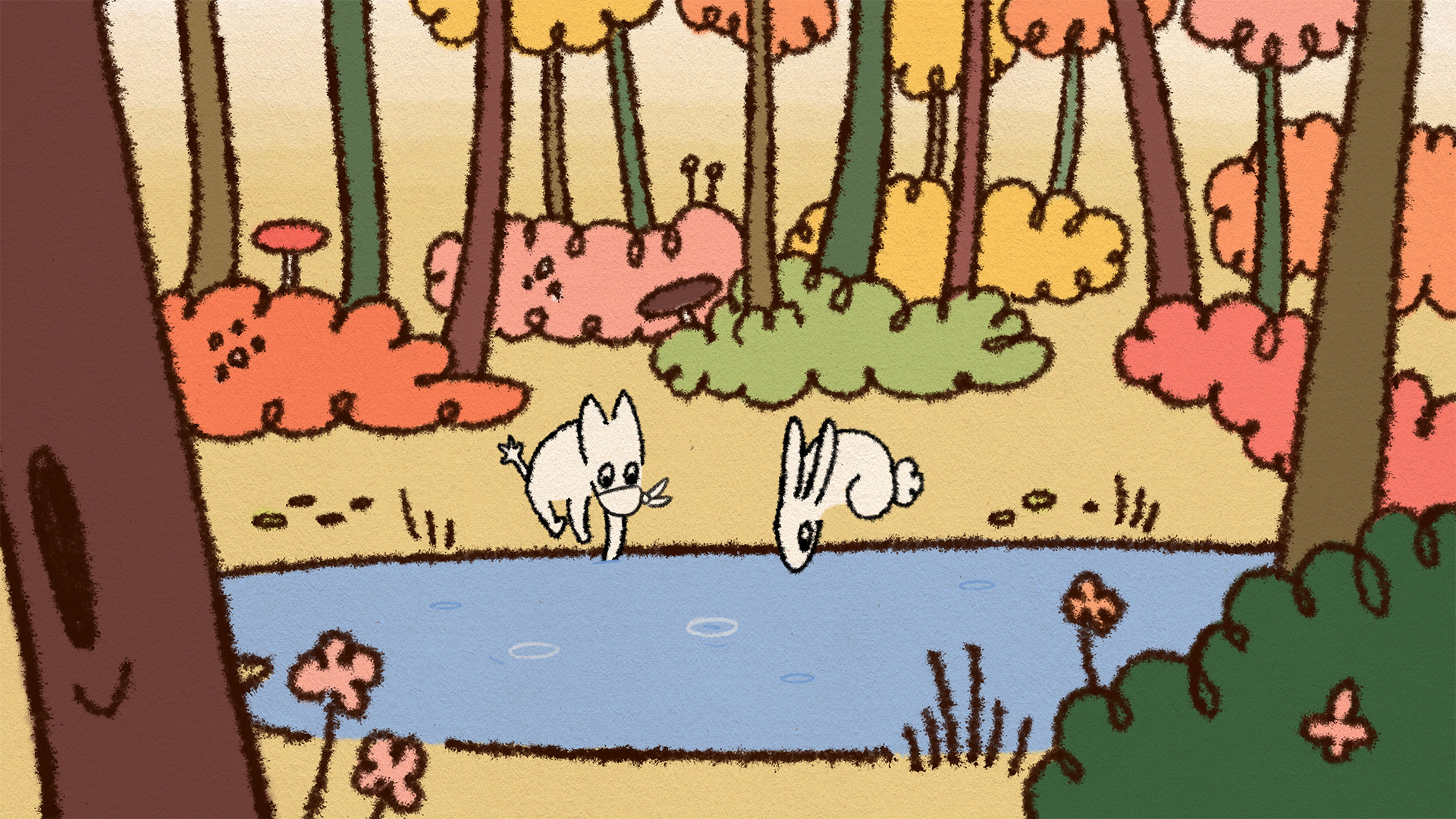
The film uses mostly black and white, but there are a few full-coloured scenes. How did you make those transitions? What impact should they have on the audience?
Kastner: It emphasises the contrast between the small, dark interior and the big, colourful forest. It’s not only in the colours… The first part of the movie is made in a four-to-three ratio, but once Wolfie goes outside and the world opens up in full colour, that is also the moment we switch to a sixteen-to-nine ratio. Through this subtle, subconscious effect, the world becomes more lively than we first thought. It’s something the audience doesn’t realise consciously. Even when I watched some movies almost shot by shot, I hardly noticed it. I guess we’ve learned to ignore those black stripes when watching a film.
The background looks like stylish, vintage wallpaper. You said it was hand-drawn?
Kastner: I drew the pattern by hand, but then digitally created the paper in post-production. I scanned the pattern and made it repeat infinitely, overlaying it on the backgrounds. I remember the interior causing disputes with my mentor. According to him, the image was too complicated. His best option was to have it like a kind of black hole, with no backgrounds. That would probably have been the most logical option, but I decided to follow my gut feeling, because I liked the atmosphere of the backgrounds as they were.
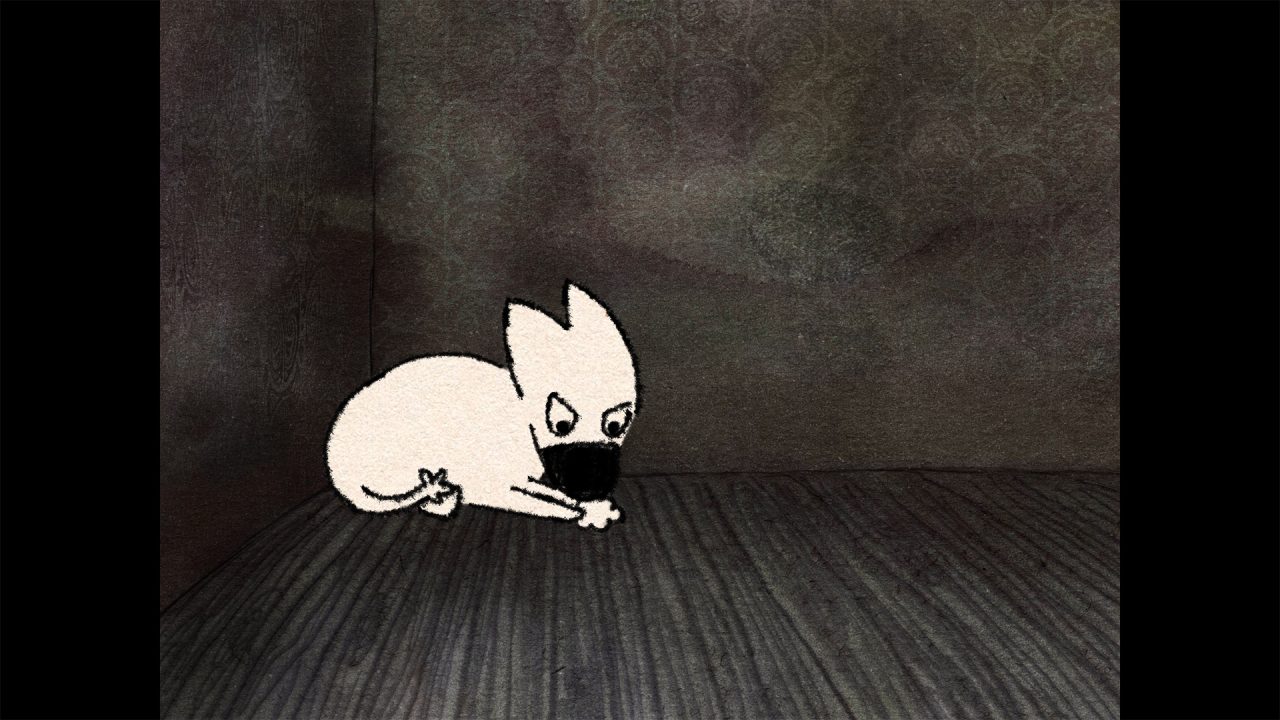 Photo: Mateusz Nowak
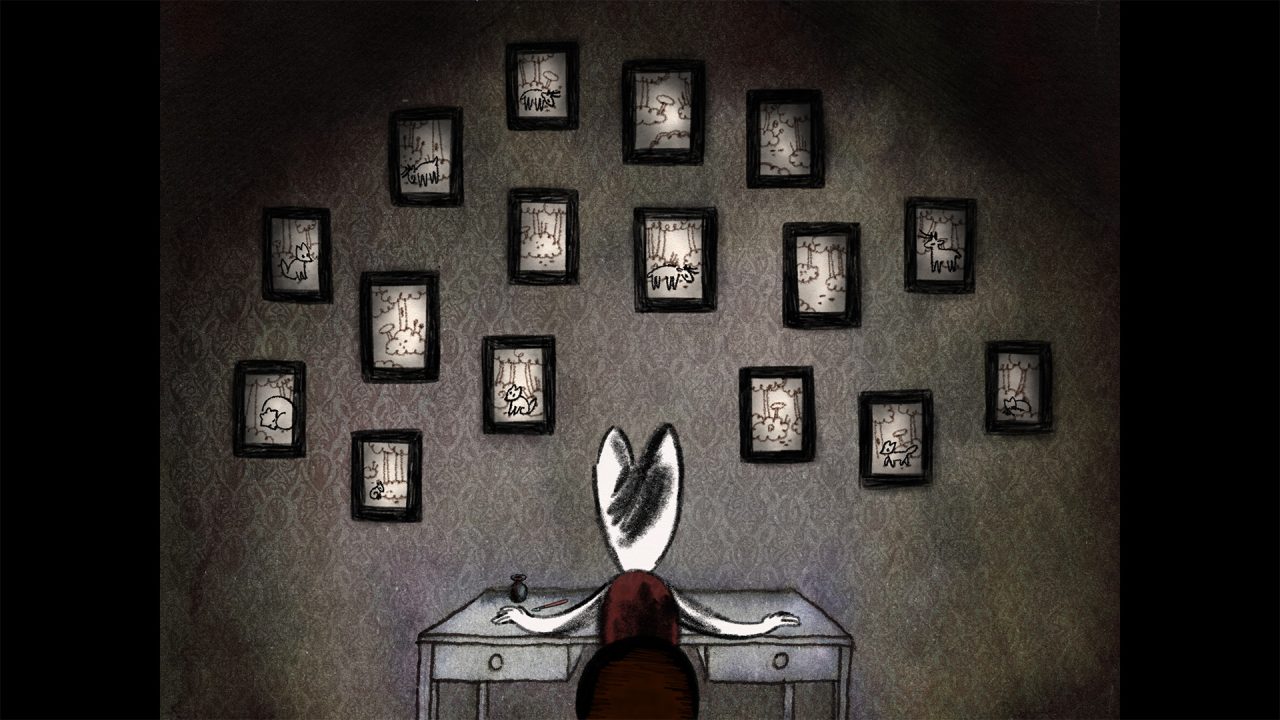 Photo: Mateusz Nowak
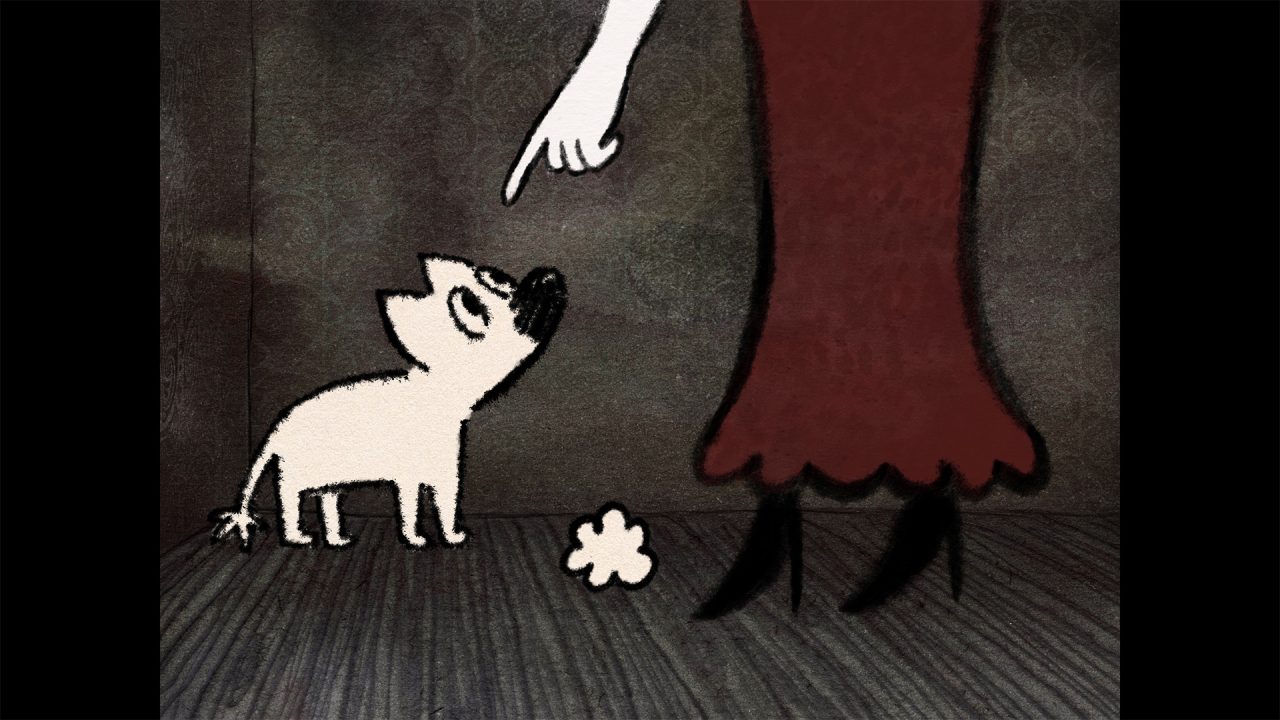 Photo: Mateusz Nowak
I hope I’m not insulting you when I say the styling looks a bit old-fashioned, fitting in an old animation tradition.
Kastner: In Czech, we call it ‘total animation’; I don’t know a proper English term for it. I use it in the scenes when the camera is moving through the forest. Generally speaking, in total animation, the entire background needs to be animated, because it’s moving in perspective. In the Czech Republic, this tradition is strong. For example, Pavel Koutský, who draws rather simple political gags, does a lot of total animation. I wanted to pay tribute to it, but animating like this myself was a different story! It adds to the film’s vintage, sketchy tone.
For Wolfie’s facial expression, you didn’t have much to work with except the eyes and ears. But still, your heart breaks every time this little creature stares into the camera!
Kastner: Wolfie is inspired by my dog. I always try to keep my characters very simple; throughout my entire life, I’ve been drawing stylised anthropomorphic animals. And if there is no need for them to speak, I don’t even give them a mouth. What also helps is the voice acting, as subtle as it is. The guy who did it isn’t even an animal impersonator; he’s an actor whom my sound designer met on a movie set, where he was acting out some weird ritual for which he needed to bark. My sound designer approached him, saying, “You know, that was some pretty good barking you did; can you try on smaller dogs too?”
I must admit that when I was watching the film, I completely forgot that WOLFIE is a student movie!
Kastner: This was my graduation movie. Currently, I’m preparing my next project, which will be an animated miniseries. It’s interesting to compare the difference between launching a project in a school context or in ‘the real world’. My producer, Tereza Havlová, launched her company, BATCH film. We’re in a very early stage of development; I presented the project at the Karlovy Vary Festival, in the context of the Incubator project for young filmmakers.
You’re currently running for the Student Oscars!
Kastner: WOLFIE has been nominated for the Student Academy Awards, competing with six other animations, out of which three winners will be chosen. So… Los Angeles, here I come!
Even if we don’t make it, being nominated is already a win for me.
Interview conducted by Gert Hermans for CEE Animation.


