CEEA Talks: Celebrating Aardman’s 50th Anniversary “The ‘ee’ as in Cheese”
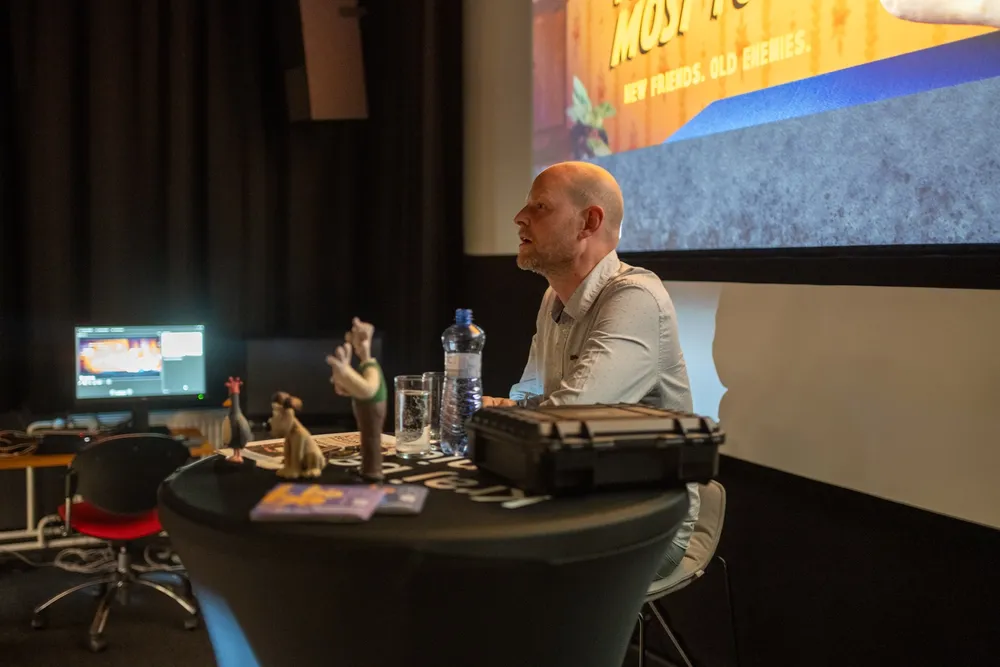
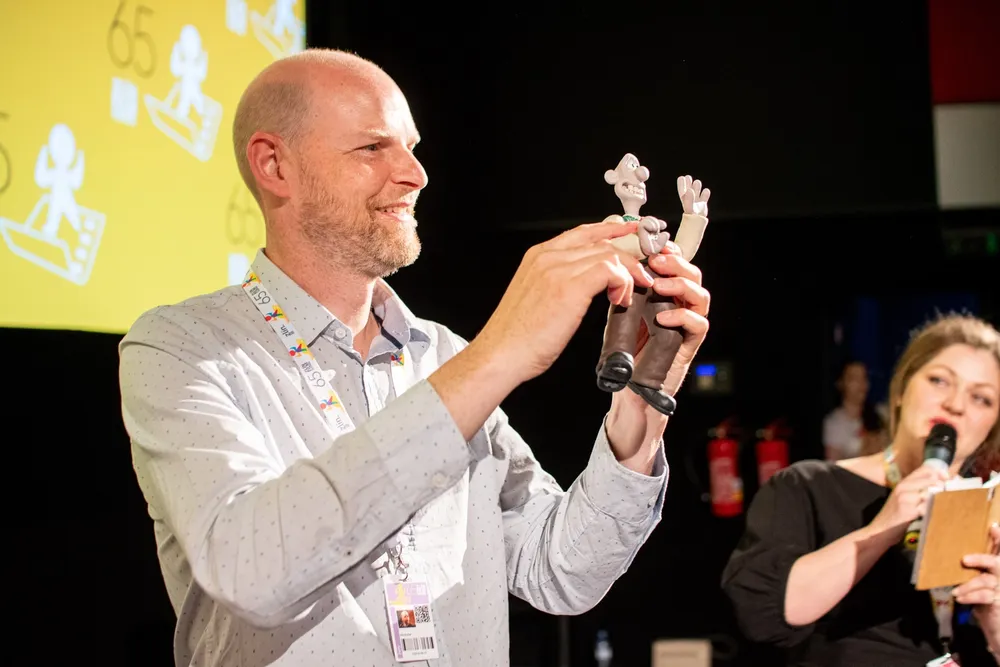
I always thought that Aardman’s mastery was in the creativity, the humour, and the stories. Since Will Becher’s masterclass at the Zlin Film Festival, I got to understand that even with the best ideas in the world, you need perfectionism, endless patience, and an unyielding will to make each scene transcend itself in terms of execution, to achieve the level that Aardman is known for. Becher spoke about 50 years of Aardman animation and about his role in their marvellous body of work.
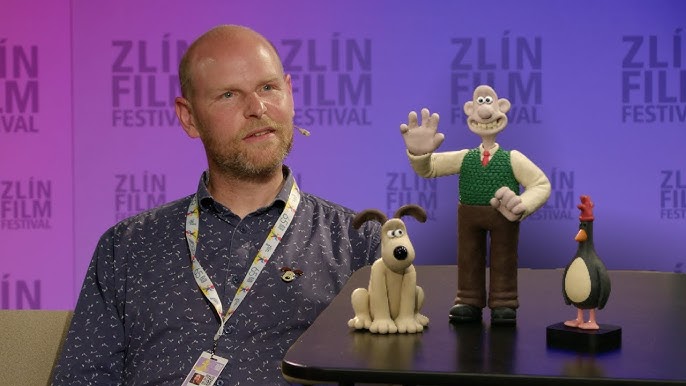
Will Becher: I wasn’t even born 50 years ago when two schoolboys, Peter Lord and David Sproxton, started a company and named it after the first character that they designed and got paid for by the BBC. Aardman’s first paycheck was £25.
Nick Park was a student at the film school; it took him six years to complete a two-year course in animation, but he had an idea for a film about two characters, Wallace & Gromit, who would later become icons of European animation. Peter and David invited him to Bristol – “You can help us here and we’ll help you finish your film.” One of the projects they worked on was a music video for Peter Gabriel’s ‘Sledgehammer’. Because Nick was the new boy, he had to animate the parts with dancing dead chickens. Wallace & Gromit was his passion project. Nick borrowed what he saw in 2D and transmitted it into stop-motion, in a very cartoony way.
As a young boy who loved making models, I used to send my films to Aardman, along with letters asking for advice. Ten years later, I found myself as an animator on the set of WALLACE & GROMIT: THE CURSE OF THE WERE-RABBIT, like in a dream. Aardman was an established company, but it had energy and flair. The studio was on the site of a business park. When all the businesspeople came out in their suits at lunchtime, the Aardman crew fell out in their Hawaiian shirts, looking like students.
Sheep in Space
I worked on SHAUN THE SHEEP, first as an animator, then as a director of the TV series, and then as co-director of SHAUN THE SHEEP: FARMAGEDDON. The film premiered at the International Space Station for a group of astronauts, and then Shaun went into space. An enormous plane got decorated with a Shaun the Sheep design – these things you can’t imagine when creating a character. A series of events led to Shaun becoming the world-famous sheep he is, one of which was one of the Spice Girls wearing a Shaun the Sheep backpack.
The premise is to present Shaun and the rest of the flock as slightly bored children, living in a quiet countryside place. The farmer is like a parent who never truly sees what mischief is going on behind his back.
Cheese x 1000
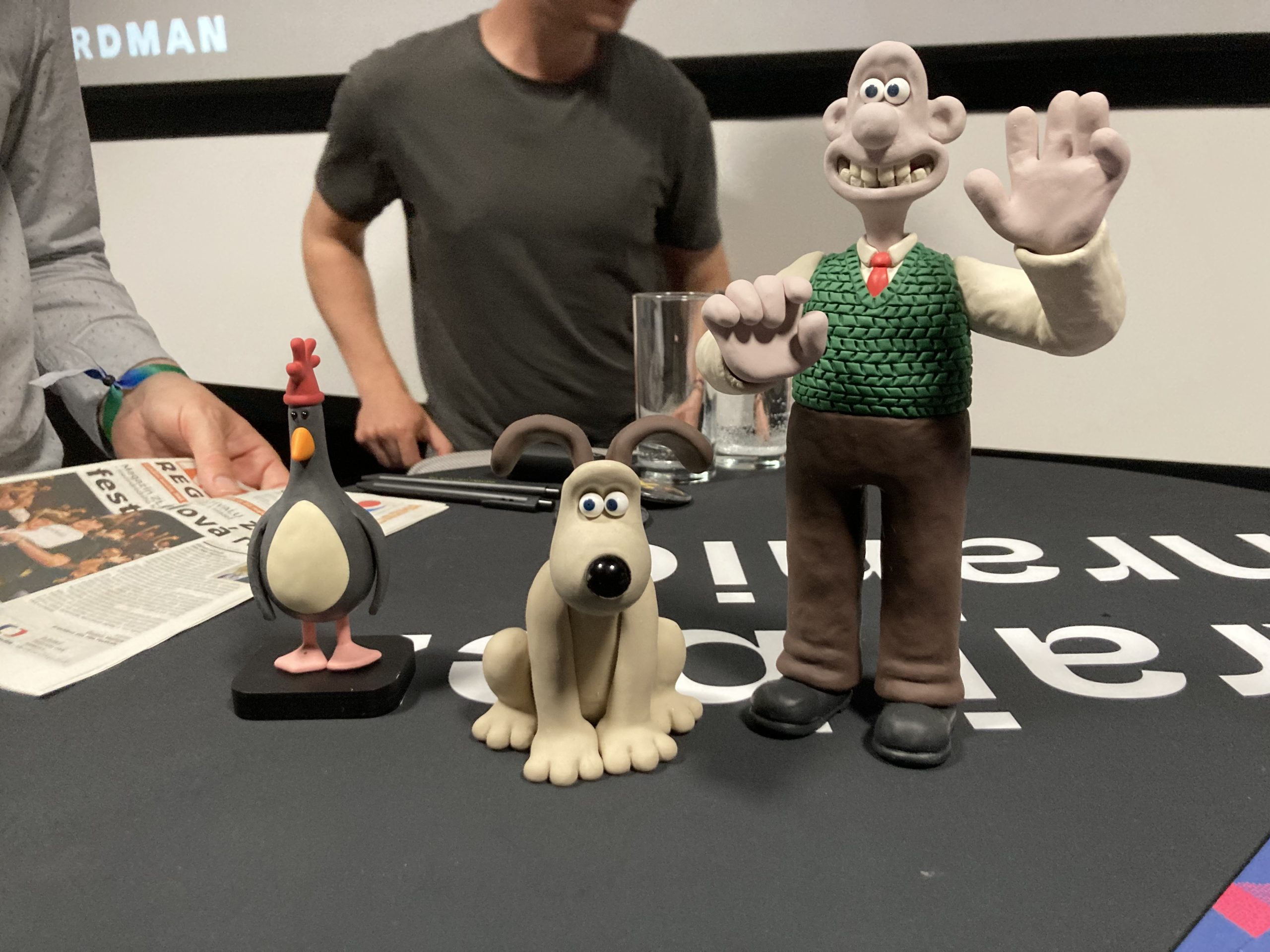
Being a supervising animator for WALLACE & GROMIT: VENGEANCE MOST FOWL, it was my job to create a character bible. The last Wallace & Gromit feature was made 20 years ago, in 2005. Wallace’s face evolved with every new project. The more his facial proportions grew over the years, the bigger he had to act to achieve the same effect. By downsizing him again, we could be more expressive.
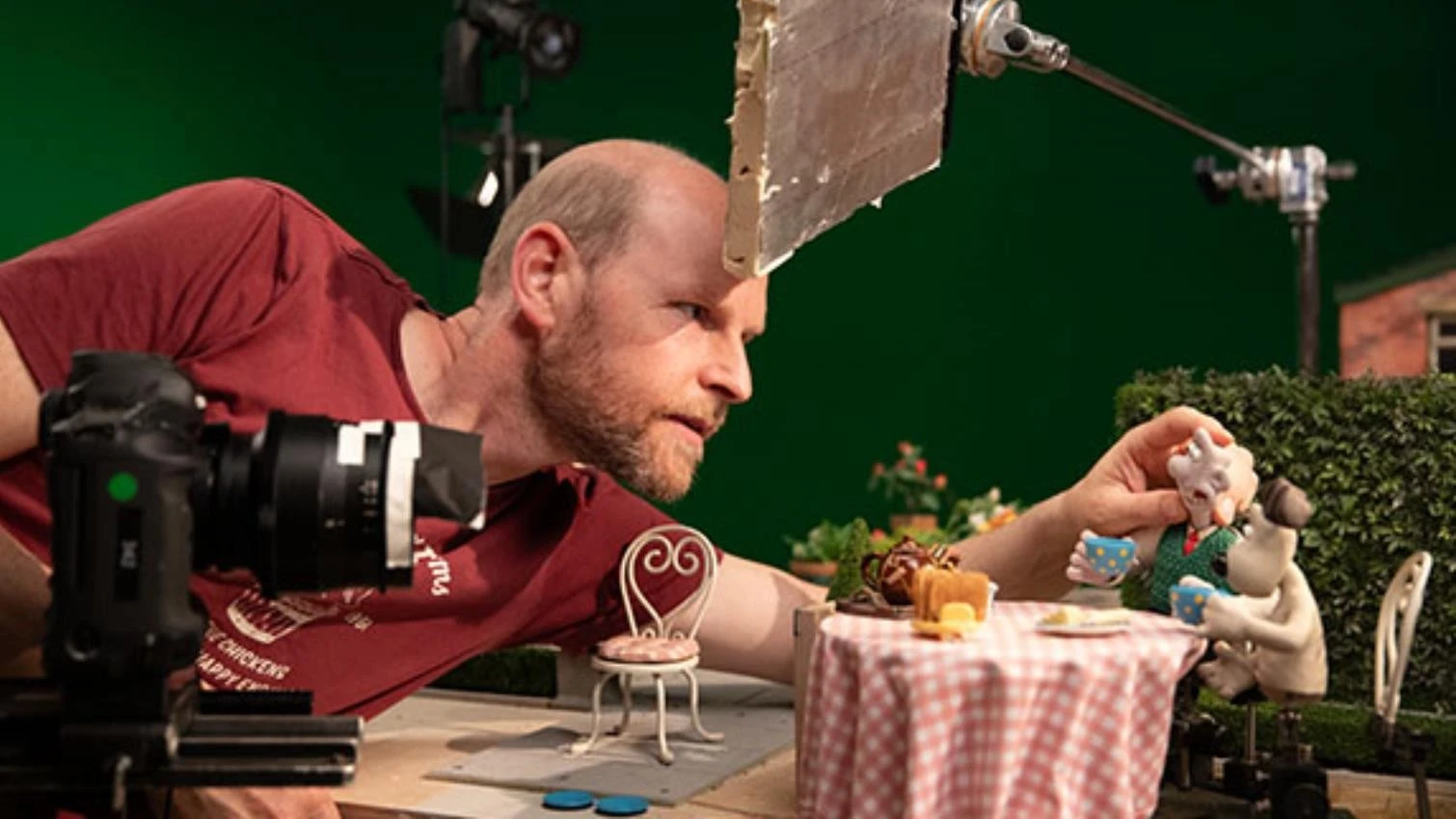
The mouth set is one of Wallace’s defining elements. We have a set of approximately 15 mouth shapes, made of clay, so animators can easily change them in every frame. We have a complete range, from the neutral, “relaxed” mouth position to the “ee” as in cheese at the other end of the spectrum. For many years, Peter Sallis was the voice of Wallace, an actor with a lovely Lancashire accent. Since Peter passed away in 2017, we’ve been working with Ben Whitehead. We record the sound first, hundreds of takes, and then animate to it. We go through every single take, and then break the recording down into phonetic sounds frame by frame. Ben must have said the word ‘cheese’ over a 1000 times.
Dogs and brows
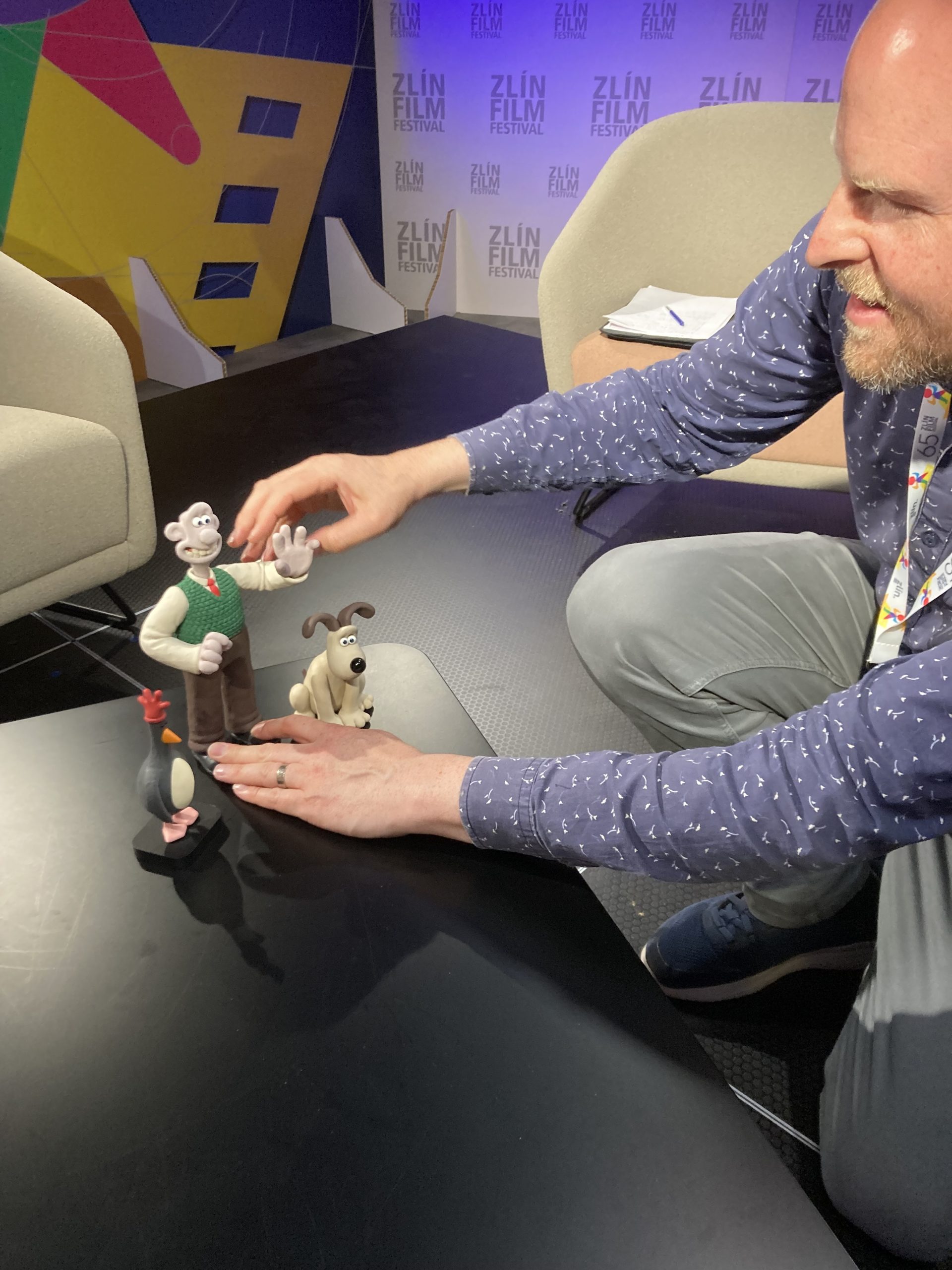
Wallace is obviously a big part of the duo, but Gromit is the key. Wallace is the talker, Gromit is the thinker. I like dogs a lot, although I never had one until recently. As a stop-motion animator, you’re like an actor, trying to understand your character, and I’ve animated Gromit for 20 years. One scene in VENGEANCE MOST FOWL showed that special bond between dog and man, when Wallace would affectionately rub Gromit’s head. Having a dog myself now, for the first time in 20 years, I was animating with some understanding of what I was doing.
Bitzer, the sheepdog in SHAUN THE SHEEP, is one of my favourite characters. We have a vast team of animators, and some of them are good at animating action scènes, or subtle drama, but for me, comedy and comical timing are my safe space! That’s why I find such joy in animating Bitzer.
We have separate puppets for different poses; Gromit walking on two legs is not the same puppet as when walking on four. The most important part of Gromit is the face, and the most important part of the face is the brow. This is where he gets all his expression from. We have a special bible for that brow.
Building worlds
We use live-action videos as a shorthand for the animator to capture the performances accurately; they serve as a reference for acting notes. Digital effects have become more important. When working on CHICKEN RUN, we used huge painted theatre backdrops. Nowadays, working with blue screen is much more effective.
We often move the camera and move the characters simultaneously, which creates a naturally blurred background. It’s a complicated technique because you have to shoot and reshoot the same scene with great precision. First, you shoot it with the characters, frame by frame, and then you take out all the moving elements and shoot it again, exactly the same, but with nothing in it, like a clean plate. This is how we get rid of the rigs and other disturbing elements. We do as many on-camera visual effects as possible. In VENGEANCE MOST FOWL is a scene where Norbot, the digital gnome, is hacked. Our DoP, Dave Alex Riddett, brought a tiny projector, attached it to a MacBook, and literally projected the flickering digits on the puppet. That was exactly the effect that we wanted to create.
We’re building realistic miniature worlds with a huge amount of details. One thing that makes the Aardman world feel so real is the handcrafted textures, their grime and grit. About 25 people are working in the art department, making all these beautiful props. Every single brick is painted by hand. There’s a glassblower in Bristol, making hundreds of objects for us. They’re not key props – they’re just somewhere in the background. Imagine working in an environment where every detail is so important. That’s very rewarding.
We try to reuse props and furniture. Wallace’s house is always the same house, probably repainted and slightly adjusted. But the more unique sets, like the aqueduct, there’s nothing we can do with them, except recycle a few bits and pieces. Some parts might be featured in exhibitions, touring the world. And we have a storage site where props are kept in boxes, an archive of 50 years of Aardman props, but there’s so much that we can’t keep, unfortunately.

Feathers McGraw
WALLACE & GROMIT: VENGEANCE MOST FOWL started with an idea that Nick had when working on THE WERE–RABBIT, 20 years ago. The character of a robotic gnome didn’t exactly fit into that film, but he kept it alive, doodling and drawing in his sketchbooks. Meanwhile, people kept asking Nick what happened to Feathers McGraw, the penguin from THE WRONG TROUSERS. This was the perfect moment to bring the iconic villain back.
In THE WRONG TROUSERS, we were introduced to Feathers’ overwhelming screen personality, but he wasn’t in that film very much, so there was very little to work with. We went through the film looking for clues, and it turned out that every single shot of Feathers was different; he changed shape and height all the time. So it was quite hard to pin down what we needed, after he had been kept imprisoned for 30 years in a zoo. There’s very little expression you can do with Feathers. He just has two pins for eyes; glass beads, basically. He has no brow, so all the expression comes from the movements, the speed, the tilt of his head, or sometimes from the camera movement.
The decision on how to have the puppets blinking is normally down to the animators, but not with Feathers McGraw. There was only a handful of animators who could work with Feathers, and we told them every day not to blink. The times that he blinks in the film are very precisely calculated, because it is a key signifier of his line of thought.
The unsung hero
There’s always a bit of a rush on our films. There’s never enough time or crew to make them the way we want to. There’s a relatively small pool of animators that we can work with; we have a limited amount of space and a limited amount of puppets. This means, if we’re starting to fall behind, we have to work smarter. We can’t just grow bigger.
A feature film is a monstrously complex thing. We have a production manager coordinating 200 creatives. Every single animator has to be shooting – we can’t afford to have people sitting around waiting. Every aspect of every shot across the film is pinned down to an old-school production board: 40 units, 45 locations,…. And every single day, something’s moving around. If Animator A needs an extra day, this is not going to affect Animator B. It’s like a jigsaw puzzle. Every morning, the production team and crew members sit together, going through the day, shot by shot… The production manager is the unsung hero of every Aardman film. In VENGEANCE MOST FOWL, we had 1,400 shots, 130 puppets, 45 shooting units, 35 animators, 20 miniature locations, and two directors. It’s a massive success when all these elements and people come together in a well-coordinated way.
The animation supervisor works closely with the director. With VENGEANCE MOST FOWL, my focus was purely on the animation team. It was like a dream job, walking every day with Nick around the studio while he would brief the animators, and then I had to make sure that everyone followed the instructions. I worked on the bible and nurtured the junior animators. Working as a stop-motion animator, no one is looking over your shoulder all the time. You learn by doing it.
Close-up thinking shot
I’m also working at the Aardman Academy. In this training facility, we currently have 11 filmmakers developing their own projects. Some of my experience can help these young people, who have come from all over the world.
What is the most difficult? The perfect frown on a dog’s face? Or a spectacular train chase? There are no easy shots; every single shot is complex and unpredictable. Often, seemingly simple shots rely on a particular piece of performance from a character, which is hard to capture through stop-motion. I remember one shot we had to re-record seven times, where Gromit tilted his head a little. That simple close-up thinking shot was a nightmare, as nobody could get the tone of the performance right. At the other end of the scale are the big setups that take a lot of set, a lot of lights, a lot of cameras, and a team to build up the whole thing. Aardman films are known for their high-action sequences. For the showdown on the aqueduct in VENGEANCE MOST FOWL, we had to take into account the scale of a boat, which we had to engineer on a scaffolding so that it could slide in and make pivotal movements in different directions. Can you imagine a piece of scaffolding, casting shadows on the sets and characters, who are meanwhile moving around on separate rigs? It’s those challenges that the crew lives for: how are we going to do something that we’ve never done before?
In Zlin
I’m watching the works of a new generation of animators as a jury member in the Zlin Festival, and I find it fascinating. Sitting in the cinema with a young audience, it’s refreshing to see how many films are combining new and old ideas, new and old techniques, in a celebration of the craft. I’ve seen nine compilation programmes, which was a true treat.
It’s a privilege to take Wallace & Gromit to festivals around the world. They are well-liked personalities at Aardman, and I’m sending messages to the company to say how people at the Zlin festival love them. It’s fantastic to see that Wallace & Gromit can still do it.