

CEEA Talks: Greek Animation
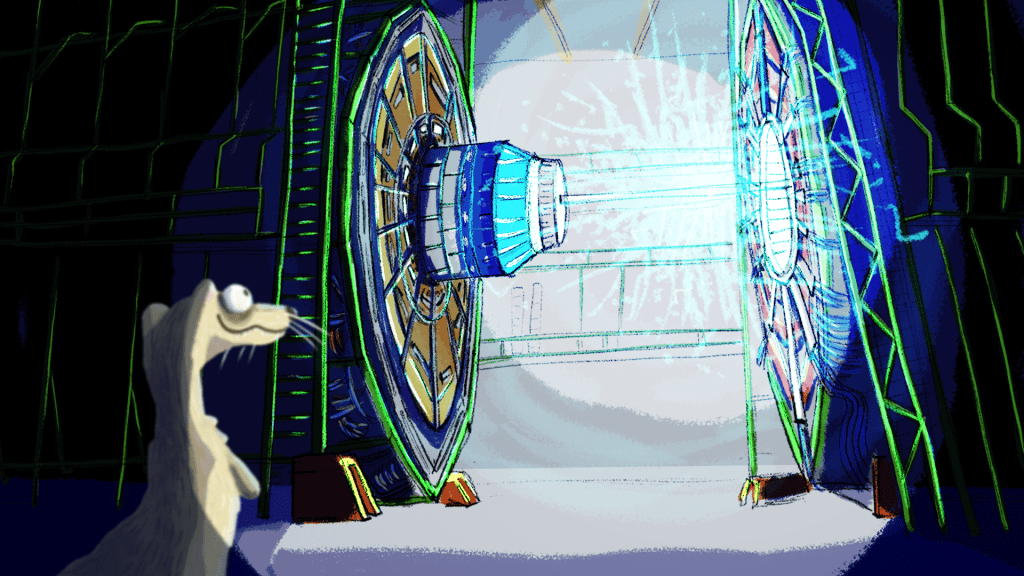
One Greek animation artist is an interesting specimen; two Greek animation artists are a crowd. When two Greek projects participated in the last edition of the CEEA Workshop, it was a golden opportunity to examine the current state of animation in Greece. With the boutique film house Heretic, Danae Spathara is producing mainly live-action films on a global scale. Now she participates in the Workshop with the animated feature HUMAN NEGLIGENCE. Isavella Alopoudi represents Neda Film and participates with the TV series NATURAL SELECTION.
What do Greek parents say when their daughter comes home, saying she wants to pursue a career in animation?
Isavella Alopoudi: My family’s first reaction was that I was going to die in the gutter, poor and miserable. People are fascinated by the world of cinema, but as they delve deeper into the details of our work, they realize that building a sustainable business is not obvious in a low-capacity country. When it comes to funding, there isn’t much stimulation for young filmmakers or small companies to venture into animation. It is significantly more expensive than live-action, and the production process takes more time.
What can you do to avoid dying poor and miserable?
Alopoudi: This is the right time to start up something in Greece. Many young people who have studied abroad and worked internationally in animation are willing to return to their home country. This could be their moment. But without national or European support schemes, this is not going to happen.
How does that impact the projects you’re currently working on?
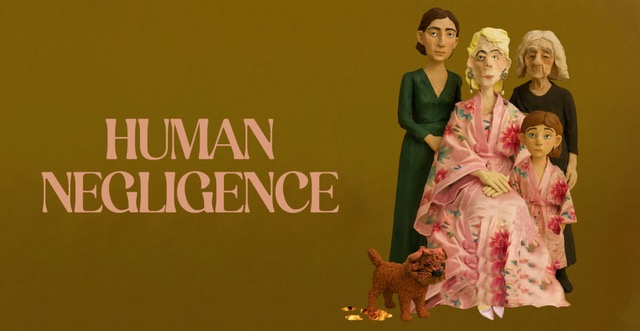
Danae Spathara: In the context of the CEEA Workshop, I’m developing the stop-motion feature HUMAN NEGLIGENCE. Co-producing with Poland and France, I want to import the expertise of animation professionals into our country. With Folioscope in France and WJT-Likaon in Poland, we have experienced studios on board. They have the connections and the know-how that we lack in animation. I’m very much looking forward to this collaboration. Ideally, we would like to bring part of the shooting to Greece, create the infrastructure and lay a more solid foundation for animation in our country.
Where conditions seem to be evolving. There is the new Hellenic Film & Audiovisual Centre, a pitching forum at the Olympia Film Festival… With NINE LIVES LEFT, the first Greek project was pitched at the CEEA Forum. That demonstrates a desire to move forward.
Spathara: From us! The interest primarily comes from creatives and producers, from the industry itself. With the core funding bodies, there’s still a long way to go.
The film fund reform will nonetheless create a new legal framework for support. What’s the background behind those changes?
Spathara: You can’t call it a change yet. The plans have been publicly announced, but we’re still waiting for those regulations.
Will animation obtain a special status within this new legal framework?
Spathara: Currently, animation is still part of the general package, the broad selective scheme. You hardly get any extra points for animated projects, which could make a change in the development or production process. Even if there is an incentive to improve the situation, the implementation has happened without delving into the subject matter.
Alopoudi: It was announced that some of the cash rebate budget would go into a separate pool for animated projects, but as usual, those regulations come with massive delays and haven’t been implemented yet.
If the new legislation is not tailored to the needs of the animation industry, then what are the main obstacles?
Spathara: Our timeline! Animation is a time-consuming process with fixed anchor points. €15,000 is the maximum you can get for development, which isn’t enough to develop a graphic bible, or make a storyboard, an animatic, or a teaser, which is what you need to go on the market and find financing partners for an ambitious stop-motion movie like HUMAN NEGLIGENCE. Unfortunately, national funds don’t seem to acknowledge what it takes to develop and produce an animated film.
Alopoudi: There is no development support for animated shorts or TV series. Co-producing shorts is a way to step outside, make connections, and test co-production partnerships. But how to launch an animated co-production without an animatic? For TV series, there used to be a short-lived funding through Creative Greece, which no longer exists. National broadcasters might dream of children’s content, but their budget is too limited to invest in internationally co-produced TV series.
With all this bad news, why would someone still co-produce with Greece?
Spathara: Because we have talents, we maintain strong ties with European partners, we know how to make things happen, and we are persistent and resilient.
You even dared to estimate your film with a €4 million budget. That’s rather ambitious!
Spathara: That’s a very modest budget for a European stop-motion animation. You will never get anything if you don’t push for the best. We have to fight for what is best for the film and for the industry.
Alopoudi: In this CEEA Workshop, we acquire a wealth of knowledge that we can share with the funds and institutions, to educate our colleagues. Animation is such a broad spectrum with so many aspects and techniques. You have to start somewhere.
You mention the many Greek talents, but is there a Greek animation school that has an impact on the national landscape?
Alopoudi: On a bachelor’s level, there is no national school for animation. The only national department is a master’s degree at the University of West Attica in Athens. Their two-year programme is relatively new, and the specific content varies depending on the students and the styles and methods they employ. Many aspiring artists are going abroad, if they can afford it, and then bringing back what they learned. Both Danae and I mostly work with animators who have studied abroad.
How about the Greek audiences? How would you estimate their potential interest in Greek animation?
Spathara: The global animation and stop-motion market grows. Stop-motion films do not achieve the same box-office results as CG-animated films. Nevertheless, animated films, and certainly animated arthouse titles, are increasingly being shown at major A-list festivals. You’ll find animated films in the official selections at Cannes, Berlin, and Venice. The Greek animation scene is growing; we have a dynamic, mainly younger audience, and Greek animators are becoming more productive, despite financial restraints.
The Animasyros Festival, on the island of Syros, is one of the biggest of its kind. Is there space for Greek productions in this festival?
Alopoudi: Definitely, as there are so few. Being such a rare specimen helps you get some spotlight. That is our current strength. Abroad, things tend to be more competitive. If you consider the budgets that we work with and compare them with French or even Polish films, it feels like we need to surpass ourselves to be out there.
How much do you feel at home in the CEEA environment?
Alopoudi: Very much! It is a great experience to feel among equals. We’re all on the same wavelength; it doesn’t feel like participants from low- and medium-capacity countries are driving in different gears.
Spathara: I don’t like the term ‘low-capacity’. Initially, it refers to a financial status, but it forces you into a position that you don’t want to be in. In all workshops I’ve attended, I noticed that at the end of the day, producers face similar problems, wherever they come from. The strength of this workshop is that one can share their worries and realise that they’re not alone. This feels like entering a community that is really inviting, supportive, relaxed, and completely safe.
I would be careful with that word, given the state you’re in after working yourself to the bone for several days on a demanding programme.
Spathara: My background is in live-action, so I have to educate myself. This is why I’m here, learning from the experts. Isavella is much more experienced in animation, as she has already done several animated projects, but I don’t feel the least bit of competition. Animation is a modest sector.
Alopoudi: CEEA creates a safe space for us to explore our potential and be honest about what exactly we want. So far, it has been an amazing experience.
Every article I found about Greek animation began with the same sentence: “The first Greek animation was political,” referring to the film IL DUCE (1946). Can Greek animation still be political?
Alopoudi: For many decades, animation was mostly used for commercial projects. I don’t remember myself as a child watching Greek animated series or movies.
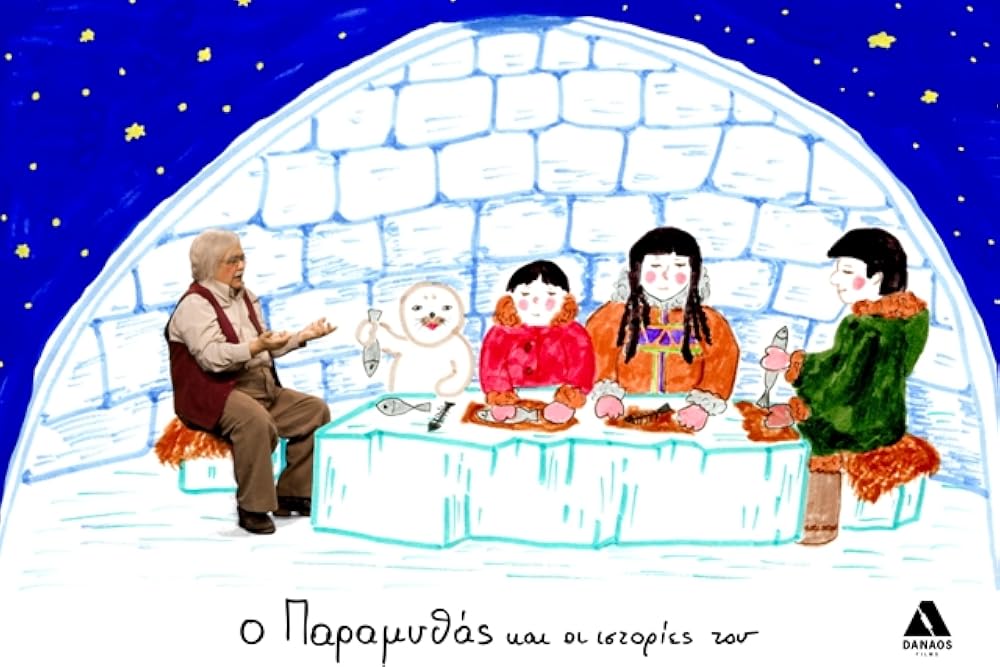
Spathara: Back in the 80s, there was this animated programme, PARAMYTHAS (The Storyteller), on public television. Nikos Pilavios, a guy with a moustache, was drawing while telling a story. My brother and I were obsessed with it; it was the best thing ever, but not at all political. I worked with Eirini Vianelli on the short film READY, which takes place entirely in the Greek parliament, but rather comments on people’s existential crises than on politics. Maybe the world is too keen to portray Greeks as being solely preoccupied with politics and philosophy.
Which leaves them no time for animation!
Spathara: Aristophanes was Greek, and he invented comedy.
Alopoudi: Perhaps our story does not sound particularly like a comedy, but we can fix that in post-production.
Interview conducted by Gert Hermans for CEE Animation.


